To keep your concrete driveway looking fresh and tidy, start with regular sweeping to clear away debris. For a thorough clean, use hot, soapy water and a scrubbing brush, or consider a pressure washer with at least 3,000 PSI for stubborn stains. Tackle oil spills promptly with a degreaser, and for deeper stains, a baking soda paste can work wonders. Remember to seal your driveway after cleaning to protect it from wear and tear. Regular maintenance, such as checking for cracks and spills, will help prolong its lifespan. For more tips on keeping your driveway in top condition, there are plenty of resources available.
Key Takeaways
- Regularly sweep away leaves and debris to keep your concrete driveway looking neat and to prevent stains.
- For routine cleaning, use hot, soapy water and a stiff brush, or choose a pressure washer for a more thorough clean.
- Tackle oil and grease stains promptly with a suitable degreaser; you may need to apply it several times for tough stains.
- Seal your driveway every few years with the right sealant to guard against water damage and extend its lifespan.
- Carry out seasonal checks for cracks and stains, addressing any issues swiftly to preserve your driveway's appearance and durability.
Preparation and Safety Measures
When preparing for driveway cleaning, it's essential to focus on preparation and safety. Start by selecting the right equipment. Assess the size and material of your driveway to determine the most suitable pressure washer and cleaning products. If in doubt, consult a professional pressure washing service for advice tailored to your specific needs. Routine cleaning is recommended to maintain your driveway's appearance and extend its lifespan.
Different driveways require different cleaning methods, so don't overlook this step.
Next, identify potential hazards. Before you begin, check for any gas or electrical lines to avoid accidents. Clear away debris to reduce the risk of slips and falls, and be cautious of uneven surfaces that could cause injuries. Additionally, it's crucial to assess the surrounding environment for potential dangers that may arise during the cleaning process.
Also, take note of any hazardous materials that may be disturbed during cleaning.
Personal protective equipment (PPE) is vital. Wear safety goggles, gloves, and non-slip footwear to safeguard against injuries. If you're using strong chemicals, a mask is advisable to protect against inhaling fumes.
General Cleaning Techniques
After ensuring safety and proper preparation, you're ready to begin the cleaning process. Start by sweeping and pre-cleaning your driveway. Use a stiff broom or leaf blower to clear away any weeds or debris. This helps prevent staining and keeps your driveway looking good. Next, soak the surface with water and scrub it using hot, soapy water and a pole brush. Rinse each section thoroughly as you go. It's also beneficial to use a heavy-duty degreaser for tackling stubborn stains during the scrubbing process.
For a more thorough clean, consider using a pressure washer. Opt for one that delivers at least 4 gallons per minute, and choose the correct spray tips for different stains. Remember to wear safety gear for protection.
Here's a summary of the general cleaning techniques:
| Technique | Description | Purpose |
|---|---|---|
| Sweeping | Remove debris and vegetation | Prevents staining |
| Soapy Water Cleaning | Scrub soaked areas with a pole brush | Loosens dirt and grime |
| Pressure Washing | Use a pressure washer for deeper cleaning | Restores driveway aesthetics |
| Rinsing | Rinse with controlled water flow | Prepares for sealing |
| Seasonal Maintenance | Regular cleaning and sealing | Prolongs the life of the driveway
Effective Stain Removal Methods
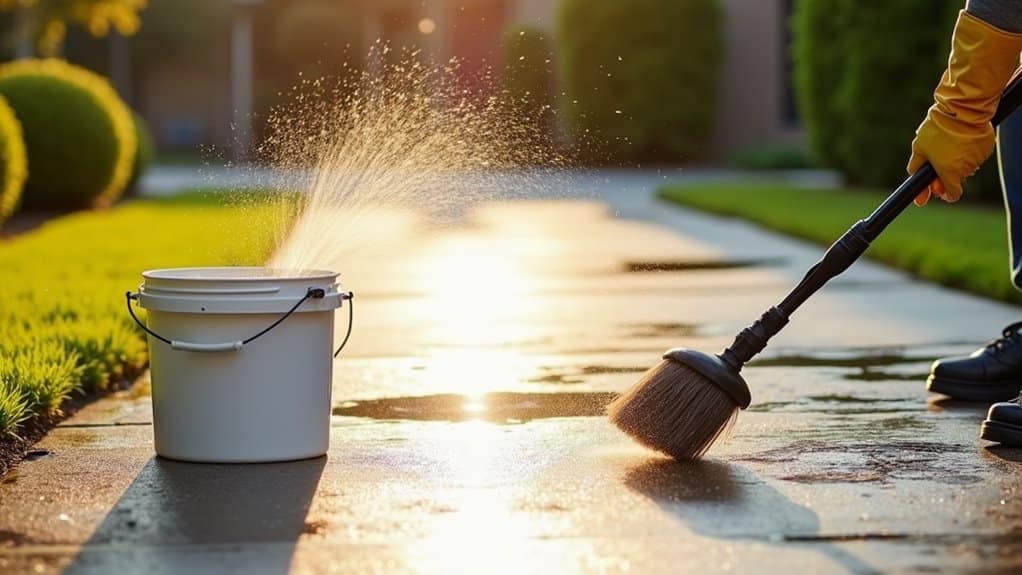
To effectively tackle stubborn stains like oil and tree sap on your driveway, it's essential to use the right methods. Start by applying a good degreaser to lift oil and grease. For added cleaning power, mix baking soda with dish soap. Keep in mind that proper cleaning methods, such as using bleach solutions for certain stains, can prevent permanent damage to your concrete surface. To remove tree sap, a bit of rubbing alcohol can be very effective. With these techniques, your driveway will look its best in no time.
Oil and Grease Removal
To effectively remove oil and grease stains from your driveway, it's important to act quickly. For fresh spills, use materials like cat litter, sand, or baking soda to absorb the excess oil.
After that, scrub the area with a paste made of baking soda and water, or use dish soap with a stiff brush, then rinse thoroughly. Using strong detergent can also help treat small spills effectively.
For older stains, consider using specialised concrete cleaners or degreasers. The poultice method can also be helpful; apply an absorbent material with a solvent to break down the oil.
For particularly stubborn stains, oven cleaner can work well if left to sit for a short period.
Preventing oil stains is equally vital. Regularly seal your driveway and promptly clean up any spills.
Placing mats or trays under vehicles can catch leaks before they become permanent marks.
Tree Sap Treatment
Removing tree sap from your driveway can be a hassle, but there are effective ways to tackle it. Begin by scraping off any excess sap before applying any cleaning solutions. WD40 or isopropyl alcohol can help break down the sap, making it easier to clean. For more stubborn stains, paint thinner may be necessary, but be sure to test it in a discreet area first. Acetone, typically found in nail polish remover, is also a quick fix. Remember that multiple applications may be necessary for tougher stains.
Here's a simple table to guide your choices:
| Method | Eco-Friendly Alternative |
|---|---|
| WD40 | Vegetable oil |
| Isopropyl alcohol | Vinegar (for softening) |
| Paint thinner | No eco-friendly alternative |
| Acetone | Nail polish remover |
| Hot soapy water | pH-neutral cleaner
Handling Oil and Grease Stains
When you notice fresh oil on your driveway, acting quickly is crucial to avoid a stubborn stain. First, absorb as much oil as possible using clay cat litter or baking soda. Once you've done that, move on to commercial cleaners specifically designed for tough grease stains. These products can effectively tackle even the most stubborn marks, helping to keep your driveway clean and inviting. Regular maintenance enhances aesthetic appeal and property value, making it essential to address these stains promptly. Additionally, performing routine inspections can help identify any common repair techniques needed for your concrete surfaces, ensuring their longevity.
Absorbing Fresh Oil
Fresh oil spills can quickly become unsightly marks on your driveway, but prompt action can save you hassle. The sooner you address fresh oil stains, the easier they're to remove.
Start by using oil absorbents like cat litter, sand, cornmeal, or baking soda. Generously cover the stain with your chosen absorbent and let it sit for a few hours to soak up the oil.
After a few hours, simply sweep away the absorbent material. If the stain remains, don't hesitate to repeat this step. Household items like sawdust or cornstarch can also help absorb the oil, though they might require a bit more scrubbing for complete removal. Remember, regular maintenance is crucial—don't let the oil penetrate deeper into your driveway!
For tougher stains, consider making a poultice with an absorptive material mixed with a solvent. Apply it to the stain, cover it with plastic, and leave it overnight to work effectively.
Just be careful with solvents to avoid damaging your driveway. Regular maintenance will keep your driveway looking clean and tidy!
Using Commercial Cleaners
Using commercial cleaners can significantly ease the removal of oil and grease stains from your driveway. With various options available, you can select a cleaner that suits your needs. Here are key points to consider:
- Efficacy: Some cleaners, such as Zep and Terminator-HSD, are effective against tough stains, while Bio-Dry takes an eco-friendly approach.
- Application Techniques: Zep and Prosoco require direct application with scrubbing, whereas Bio-Dry's powder can be sprinkled and brushed in without water.
- Coverage: Bio-Dry covers up to 400 sq. ft. per pound, while Zep's concentrated formula can produce up to 20 gallons of cleaner.
- Environmental Impact: Opt for cleaning solutions like Prosoco or Bio-Dry for a more sustainable choice that's kind to the planet.
When comparing cleaners, consider both their effectiveness and your driveway's specific requirements.
By choosing the right product and applying it properly, you can refresh your driveway while being environmentally conscious.
Don't let those stubborn stains persist—take action and revitalise your driveway today!
Removing Tree Sap Efficiently
Tree sap can be a sticky annoyance, but removing it doesn't need to be a hassle. Here's a straightforward guide to tackle the problem using both chemical methods and manual techniques:
| Method | Description |
|---|---|
| WD40 | Breaks down sap; wash the area with soapy water afterwards. |
| Isopropyl Alcohol | Dissolves sap; apply with hot, soapy water. |
| Vinegar | Spray on, wait 5-10 minutes, then wipe off. |
| Scraping | Use a plastic scraper to gently lift off sap. |
| Rubbing Alcohol | Dampen a cloth with alcohol and rub gently. |
To prevent tree sap from accumulating, sweep your driveway regularly. For eco-friendly options, vinegar or rubbing alcohol are less harmful to the environment. Always test any chemical on an inconspicuous area first to ensure it won't damage the surface. Don't forget to wear gloves when handling chemicals to protect your skin. With these methods, you'll efficiently remove tree sap and keep your concrete looking neat and tidy.
Utilizing Pressure Washing
After dealing with tree sap, it's time to consider how pressure washing can bring your driveway back to life. This effective cleaning method removes stubborn stains and revitalises the surface, making it look as good as new.
Here's a straightforward guide to get you started:
- Choose the Right Pressure Washer: Select a quality pressure washer with at least 3,000 PSI for effective results.
- Prepare the Area: Clear away debris and cover any plants to protect them from chemicals and high-pressure spray.
- Use Cleaning Agents: Apply a suitable detergent to loosen dirt, which will enhance the pressure washing process.
- Master Your Technique: Move the spray handle side to side, overlapping your strokes to ensure thorough cleaning.
Always start with a low PSI to avoid damage, and use the correct nozzles for different tasks.
Regular pressure washing not only keeps your driveway looking great but also extends its lifespan.
Sealing Your Concrete Driveway
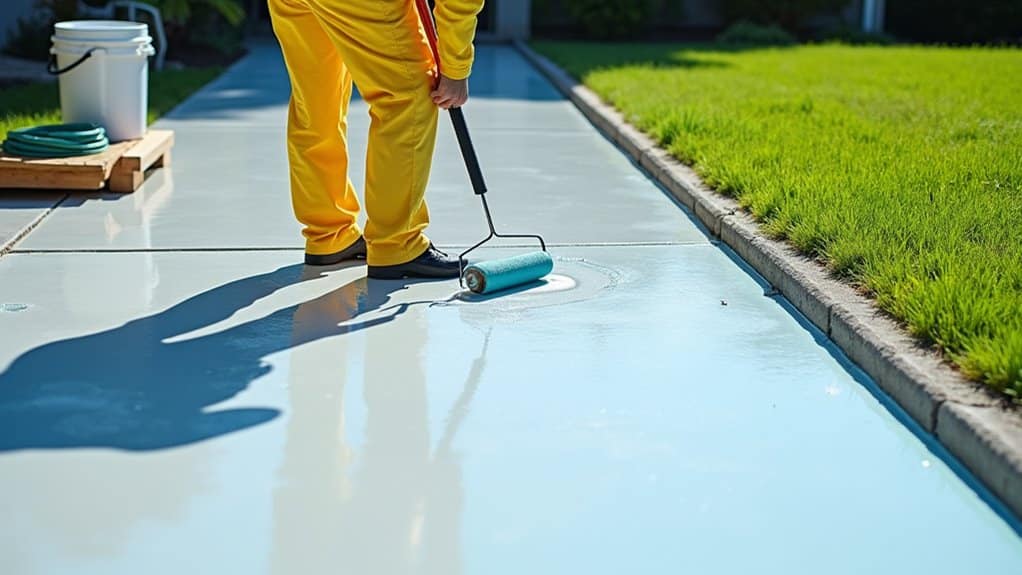
Sealing your concrete driveway is crucial for maintaining its appearance and longevity. It safeguards against moisture, chemicals, and stains while improving its overall aesthetic. Here's a straightforward guide for selecting and applying the right sealer:
| Step | Details | Tips |
|---|---|---|
| Preparation | Ensure the concrete has cured for 28 days. | Pressure wash and trim any grass. |
| Sealer Selection | Decide between acrylic, epoxy, or penetrating sealers. | Choose a sealer that suits your driveway's needs. |
| Application | Apply on a dry day using a roller or sprayer. | Begin in the centre and apply thin coats. |
Before sealing, check the surface's absorption by spraying it with water. If the water beads up, you may need to acid etch the surface. It's best to apply two thin coats to ensure even coverage and avoid drips. Also, steer clear of sealing if rain is forecast within 24 hours. Remember that using a proper sealer can enhance the durability and longevity of your driveway, making it a wise investment.
Following these steps will help keep your driveway looking fresh and tidy, enhancing both its lifespan and your home's curb appeal.
Maintenance Tips for Longevity
To keep your driveway in excellent condition, regular maintenance is essential. With a bit of time and effort, you can ensure your concrete lasts for years. Here are some important maintenance tips:
1. Seasonal inspections: After winter and throughout the year, check for cracks, stains, or any signs of damage.
Catching issues early can save you from expensive repairs later.
2. Immediate crack repairs: Don't delay! Fill any cracks you spot straight away to prevent water damage and further expansion.
Use a quality filler for the best outcome.
3. Regular cleaning: Sweep or blow away debris, and power wash your driveway in the summer.
This helps prevent the build-up of grit that can damage the surface.
4. Spill protection: Clean up oil, petrol, and grease immediately to avoid staining.
A degreaser can help tackle tougher stains.
Frequently Asked Questions
How Often Should I Clean My Concrete Driveway?
The frequency of cleaning your concrete driveway depends on usage and stains. For most driveways, an annual clean is usually enough. However, if your driveway experiences heavy traffic, you might want to consider cleaning it every three months to maintain its appearance.
Can I Use Bleach for Cleaning My Driveway?
Yes, you can use bleach to clean your driveway, but it's important to prioritise safety. Always dilute the bleach properly, protect nearby plants, and consider eco-friendly alternatives like vinegar. Regular maintenance is essential for keeping your driveway in good condition!
What Time of Year Is Best for Driveway Cleaning?
The ideal time for cleaning your driveway is spring. The milder weather makes it easier to remove dirt and grime effectively. Choose a period when temperatures are consistently warm and dry for the best results. For instance, after a rainy spell, the ground will be softer, allowing for easier cleaning without the risk of damaging your driveway.
Is Pressure Washing Safe for All Concrete Types?
Not all concrete is the same, and using a pressure washer can damage some surfaces. It's essential to check compatibility before proceeding. For instance, softer concrete types may require a gentler approach. After pressure washing, consider applying a concrete sealer to protect and prolong the life of your surface.
How Can I Prevent Future Stains on My Driveway?
To prevent future stains on your driveway, use effective prevention methods. Start by applying a quality sealant to ensure even coverage. Regularly clean the surface and quickly deal with any spills, like oil or paint, to keep your concrete looking fresh.
Conclusion
By following these driveway cleaning tips, you can keep your concrete surface looking bright and tidy. Regular maintenance not only enhances the appearance of your driveway but also prolongs its lifespan. A clean driveway boosts your home's curb appeal and creates a welcoming entrance for visitors. So, roll up your sleeves and address those stains—your driveway will appreciate it! With a bit of effort, you can turn it into a proud feature of your property.

Learn about the diverse types of concrete used in construction and discover which mix can transform your next project.

For a long-lasting driveway that laughs in the face of the UK's unpredictable weather, the C20 concrete mix is your Read more

In the UK, you've got a a lot of lightweight concrete types to choose from, each with its unique perks. Read more