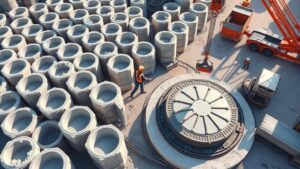
Foam concrete is an excellent choice for projects requiring lightweight yet strong materials. Its effective thermal insulation can significantly improve energy efficiency, making it perfect for insulated buildings. Consider using it to fill voids, create lightweight foundations, or enhance durability in construction. The quick setting time and straightforward application can lower labour costs and speed up project timelines. Plus, its eco-friendly properties align with sustainable building practices. If you're looking into foam concrete, you'll find numerous benefits tailored to your construction needs.
Key Takeaways
- Foam concrete is perfect for lightweight applications, minimising overall structural load and enabling construction on less stable ground.
- Its excellent thermal insulation properties make it ideal for energy-efficient building projects, significantly reducing heating and cooling expenses.
- Consider using foam concrete for filling voids and stabilising soil in geotechnical applications, effectively tackling construction challenges.
- The material's quick setting and self-levelling features streamline installation, cutting down on labour costs and improving project efficiency.
- Foam concrete aligns with sustainability goals by reducing cement usage and lowering greenhouse gas emissions, making it an environmentally friendly option for modern construction.
Overview of Foam Concrete
Foam concrete, also known as aircrete or cellular concrete, is a lightweight building material made from a mix of cement, aggregates, water, and a foaming agent, which creates tiny air bubbles. This results in a low-density product with a high strength-to-weight ratio, making it ideal for a range of construction applications.
Recent advancements have increased foam concrete's versatility. Its non-toxic properties make it suitable for eco-friendly building practices, and its excellent thermal insulation helps reduce energy costs in properties.
It's effective for filling voids, such as those caused by abandoned pipes, and is also used for insulation in flat roofs and walls to minimise heat loss. Additionally, foam concrete is perfect for landscaping tasks, including bridge approaches and trench backfills, due to its lightweight nature. Its self-levelling characteristics simplify the installation process and can lower labour expenses.
The material is also fire-resistant and offers soundproofing benefits, making it a popular choice for various construction needs. Furthermore, the versatility of foam concrete allows it to be used for applications such as bridge abutments and repairs. Overall, foam concrete's adaptability and advantages make it a strong contender in modern construction.
Key Components and Composition
In foam concrete, it's crucial to understand the key ingredients for optimal performance.
Foaming agents are essential for achieving the right density and strength, while adding polymers can enhance durability and workability. The production methods used also significantly influence the final properties of the foam concrete. By carefully selecting these components, you can customise the mixture to suit specific project needs.
For instance, if you require a lightweight yet sturdy structure, choosing the appropriate foaming agent can make all the difference.
Essential Ingredients Overview
Understanding the essential ingredients of foam concrete is crucial for achieving the desired performance and properties in construction. The primary binder is usually 53-grade Ordinary Portland Cement (OPC), which affects the strength and density of the final product. Additionally, incorporating lightweight aggregates can further enhance the lightweight nature of the foam concrete mix.
You can improve the mix by adding supplementary materials like silica fume or fly ash, which enhance durability. Ensure that your cement and aggregates meet standards such as ASTM C33 for quality.
Fine aggregates, such as sand, are important; they shouldn't exceed 5mm in size and must comply with gradation standards set out in ACI 523.1R-92.
Filler materials, like crushed ceramic bricks, can also influence the characteristics of the foam concrete.
Water quality is vital; it should adhere to ASTM C160 standards to ensure workability and consistency.
To further modify properties, consider using admixtures like water-reducing agents for better material compatibility.
Lastly, if you choose to add fibres, such as glass or synthetic types, they can significantly enhance the durability and strength of your foam concrete, improving its overall performance.
Role of Foaming Agents
The effectiveness of foam concrete largely depends on foaming agents, which are essential for achieving the right properties. The most common types are synthetic foaming agents, known for creating uniform and stable bubbles. For enhanced foam stability, enzyme-based foaming agents that use active proteins can improve durability.
Understanding foam stability is crucial; it ensures that air bubbles hold their shape during mixing, placing, and hardening. The concentration of the foaming agent affects both the air content and density of the foam concrete, which in turn influences its strength. For example, using Drexel FM-160 can produce high-quality results, while concentrated liquid dish soap, although less durable, may suffice for simpler tasks. Audience engagement strategies, such as using humor, can also enhance the overall effectiveness of presentations related to foam concrete.
Adding substances like vegetable glycerin can further improve bubble stability, extending the foam's lifespan. Foam generators are used to mix these foaming agents with water, creating the stable foam necessary for the thermal and acoustic insulation properties that distinguish foam concrete.
Choosing the right foaming agent is key to meeting project specifications and ensuring the desired performance.
Polymer Enhancements Benefits
Polymer enhancements in foam concrete provide several key benefits that significantly enhance its performance and usability. One of the main advantages is its lightweight nature, which reduces stress on the underlying soil and helps prevent settlement issues. This makes it suitable for a range of applications, from residential to commercial projects. Additionally, the lightweight material facilitates easier handling and application in tight spaces where heavy machinery is impractical.
The high void content in foam concrete contributes to a cellular structure that leads to cost savings in both materials and labour. Strength and durability are also notable benefits of polymer foam. It boasts a load-bearing capacity of 2,000 to 4,000 pounds per square foot, ensuring stability over time.
The quick hardening process allows for immediate use, which improves project efficiency. Moreover, the environmentally friendly composition of polymer foam, made from renewable materials, promotes sustainability by cutting down on waste and maintenance requirements.
Finally, innovations in polymer foam enhance its versatility for various applications such as driveways, pavements, and industrial flooring. The injection method ensures precise levelling, reducing trip hazards and improving aesthetics.
Advantages of Foam Concrete

Foam concrete offers several benefits that can enhance your construction projects.
Its lightweight nature reduces structural loads, making it easier to handle and install. For example, using foam concrete in high-rise buildings can significantly lessen the burden on foundations. Additionally, it boasts excellent insulation properties, which can help lower energy bills in the long run. This is largely due to its cellular structure, which contributes to low thermal transfer properties and often eliminates the need for additional insulation in floors and walls.
Lightweight Structural Benefits
When it comes to construction materials, foam concrete is a standout choice due to its lightweight structural benefits. One of its key advantages is the significant weight reduction it provides, which doesn't compromise structural performance. By lowering the overall weight of a building, it reduces the load on foundations and supports, enhancing stability.
Foam concrete is also easy to handle and transport, which boosts construction efficiency. This material streamlines the building process, leading to quicker installations and lower labour costs. Its ability to flow freely allows it to fill gaps and cavities effectively, ensuring complete coverage. Additionally, using waste materials in foam concrete can further enhance its properties and promote sustainability.
Moreover, foam concrete improves structural integrity with its supportive core, which helps prevent cracking and reduces the risk of structural failure. It distributes loads evenly, maintaining the durability of walls, floors, and other elements. Additionally, its composition of polystyrene or polyurethane enhances its lightweight characteristics, making it an ideal choice for various applications.
Its resistance to harsh weather conditions further ensures that your projects remain robust over time. In summary, choosing foam concrete offers a versatile and cost-effective solution that balances strength and longevity.
Superior Insulation Properties
Foam concrete is known for its excellent insulation properties, making it a top choice for energy-efficient building. With a thermal conductivity of 0.1 to 0.3 W/m·K, it significantly outperforms traditional concrete, effectively reducing heat transfer. This enhanced insulation comes from the air bubbles within the material, which lower its density.
At a density of around 930 kg/m³, foam concrete provides a thermal resistance of 0.4 m²·K/W with just a 20 cm thickness. This means it can maintain stable indoor temperatures, even when outside conditions change, ensuring comfort and cutting down on heating and cooling needs.
In warmer climates, using foam concrete can lead to substantial energy savings, potentially halving air conditioning costs.
Cost-Effective Construction Solution
Cost-effective construction solutions are crucial in today's competitive building industry, with foam concrete emerging as a standout option. This innovative material not only lowers initial costs but also offers long-term savings and structural benefits.
Here are three main cost advantages of using foam concrete:
- Reduced Material and Labour Costs: Foam concrete uses less material and simplifies the installation process, significantly reducing labour expenses.
- Lower Energy Consumption: Its production and transportation require less energy, which helps to lower overall costs.
- Long-Term Maintenance Savings: The durability of foam concrete leads to fewer repairs, resulting in considerable savings over time.
Using foam concrete in your projects paves the way for design innovations that enhance both appearance and functionality.
Numerous case studies demonstrate its versatility and effectiveness in various applications, from foundations to internal walls. Its lightweight nature makes handling and installation easier, making it a practical choice for modern construction needs.
Applications in Construction
Foam concrete's versatility makes it a valuable material in various construction applications. Its lightweight nature and ease of handling allow you to address numerous challenges, from structural filling to geotechnical solutions. Recent innovations in the industry have improved its effectiveness, but you may still encounter issues such as managing curing times and achieving the required compressive strength.
Here's a quick overview of key applications:
| Application Type | Description | Benefits |
|---|---|---|
| Structural Filling | Filling voids and cavities | Enhanced stability and load distribution |
| Lightweight Foundations | Creating stable bases for structures | Lower overall building weight |
| Insulated Concrete Forms (ICFs) | Versatile forms for sustainable buildings | Improved energy efficiency |
| Road Sub-Bases | Preventing frost heave and filling voids | Increased road durability |
Using foam concrete can streamline many construction processes and contribute to more efficient building practices.
Insulating Properties of Foam Concrete

The insulating properties of foam concrete make it a popular choice for energy-efficient building projects. Its distinctive features significantly improve thermal performance, which can lead to lower energy bills and a reduced environmental impact.
Here's why foam concrete is a standout in insulation:
- Low Thermal Conductivity: Foam concrete has thermal conductivity values between 0.1 and 0.3 W/m·K, which is far superior to traditional concrete that averages around 1.6 W/m·K.
- Cellular Structure: The air bubbles in foam concrete lower its density, enhance moisture resistance, and improve thermal stability, thereby reducing heat transfer.
- Energy Savings: Buildings using foam concrete can cut air conditioning costs by up to 50%, keeping indoor temperatures stable despite outdoor weather changes.
These attributes not only promote energy efficiency but also help create comfortable living spaces.
Acoustic Performance Benefits
The acoustic performance benefits of foam concrete are often underestimated, yet they play a crucial role in modern construction. Its unique cellular structure enhances sound absorption and significantly reduces noise transmission, making it an excellent choice for effective acoustic design.
Foam concrete has a higher noise reduction coefficient (NRC) than traditional concrete, which is particularly beneficial in both residential and commercial settings.
When implementing soundproofing measures, the porous nature of foam concrete efficiently absorbs sound energy, minimising echoes and enhancing overall sound quality. With a density of around 1130 kg/m³, it offers ideal acoustic properties, which can be further improved by adding fibres and damping agents.
Foam concrete is also effective in filling voids and gaps to reduce sound transmission, making it suitable for partitions and insulation within buildings.
It's especially valuable in specialised environments like recording studios and home theatres, where sound quality and speech clarity are paramount.
Thus, incorporating foam concrete into your projects not only meets thermal insulation requirements but also significantly enhances acoustic performance.
Sustainability Considerations

When it comes to sustainable building materials, foam concrete is a strong contender due to its various environmental benefits. This modern material supports eco-friendly practices and can significantly boost your project's sustainability credentials.
- Reduced Cement Use: Foam concrete uses less cement than traditional materials, which lowers greenhouse gas emissions during production.
- Energy Efficiency: Its lightweight design cuts down on energy costs related to transportation and installation, making it an ideal choice for environmentally conscious builders.
- Less Waste: The lack of coarse aggregates means less construction waste and better conservation of natural resources.
Moreover, foam concrete has excellent thermal insulation properties, reducing the need for heating and cooling and thereby lowering overall energy consumption.
It also supports a circular economy by integrating recycled materials, enhancing its sustainability profile. Additionally, the development of eco-friendly concrete made from repurposed shells demonstrates a growing trend in using waste materials for construction, further emphasizing sustainability.
With a long lifespan and improved indoor air quality—thanks to the absence of volatile organic compounds (VOCs)—foam concrete helps create durable and healthy living spaces.
Cost Efficiency in Projects
When considering foam concrete for your project, you'll find it offers notable savings on materials, as it requires less than traditional concrete.
The straightforward installation process also leads to reduced labour costs, making it a smart financial choice.
Reduced Material Expenses
Many construction projects can benefit from the cost efficiency of foam concrete, especially in terms of reduced material expenses. Here are some key advantages:
- Material Reduction: Foam concrete uses less raw material than traditional concrete, incorporating industrial by-products like fly ash. This approach reduces waste and conserves natural resources.
- Foundation Savings: Its lightweight characteristics enable construction on less stable ground without the need for extensive foundation work, cutting down on piling, sand drains, or grade beams.
- Operational Cost Efficiency: Foam concrete provides excellent thermal insulation, leading to reduced heating and cooling needs and lower ongoing operational costs.
These benefits can lead to significant savings in your project budget. Additionally, research has shown that using fly ash in concrete mixes can further enhance cost efficiency by minimizing cement requirements.
By minimising overall material requirements and allowing for quicker installations, foam concrete can effectively lower project expenses while ensuring structural integrity.
The economic advantages not only enhance your budget but also promote sustainable building practices, making foam concrete a smart choice for a wide range of projects.
Lower Labor Costs
Using foam concrete can significantly reduce labour costs in construction projects, making it a smart choice. It eliminates the need for specialised equipment and highly skilled workers, thus improving efficiency. The faster installation saves time, allowing your team to complete tasks more quickly, while its lightweight nature simplifies handling and transport, optimising your workforce.
Foam concrete's self-leveling and self-compacting properties mean you won't need vibration equipment, streamlining the construction process. You can fill tricky spaces easily, which cuts down on the need for extra labour. Moreover, its ease of pumping over long distances reduces reliance on heavy machinery and extensive excavation, further lowering labour requirements.
Its durability also means fewer repairs down the line, which lowers ongoing maintenance costs. With resistance to fire, water, and frost, foam concrete helps maintain structural integrity over time.
Thermal Insulation Capabilities

Foam concrete is an excellent choice for energy-efficient building due to its impressive thermal insulation properties. Its effectiveness stems from how its density influences thermal conductivity. By selecting lower density foam concrete, you can significantly improve heat resistance and minimise thermal conductivity.
Here's what makes foam concrete stand out:
- Density Variation: Foam concrete typically ranges from 600 to 1600 kg/m³, with thermal conductivity between 0.1 and 0.7 W/m·K. For every 100 kg/m³ decrease in density, thermal conductivity drops by 0.04 W/m·K.
- Air Trapping: The porous structure of foam concrete captures air, which slows down heat transfer and helps maintain consistent indoor temperatures, crucial for conserving energy.
- Efficiency Compared to Traditional Concrete: Foam concrete has only 5 to 30% of the thermal conductivity of standard concrete, allowing for similar insulation with significantly less material.
These benefits lead to reduced energy consumption and greater indoor comfort. Buildings made from foam concrete lower the need for heating and cooling, promoting environmental sustainability through superior thermal insulation.
Geotechnical Applications
When tackling geotechnical challenges, foam concrete stands out as an effective solution due to its unique characteristics. Its lightweight quality makes it perfect for constructing lightweight embankments and backfills for retaining walls, significantly reducing structural loads while improving stability.
Using foam concrete for filling voids and cavities can help prevent subsidence and structural damage, addressing vital geotechnical stability issues.
Moreover, foam concrete plays a key role in soil stabilisation methods, including soil densification and the remediation of expansive soils. By injecting foam or employing chemical grouting, you can increase the soil's load-bearing capacity and reduce expansion risks.
Its adjustable density allows for tailored applications, ensuring optimal performance in various scenarios, such as bridge approach embankments and landslide repairs.
The long-term stability offered by foam concrete reduces the likelihood of future settlement, making it a cost-effective alternative to traditional techniques.
By incorporating foam concrete into your projects, you not only lessen the reliance on heavy machinery, but also benefit from its versatility across residential, commercial, and industrial applications.
Adopting these geotechnical solutions can lead to more resilient and sustainable infrastructure.
Infrastructure Uses
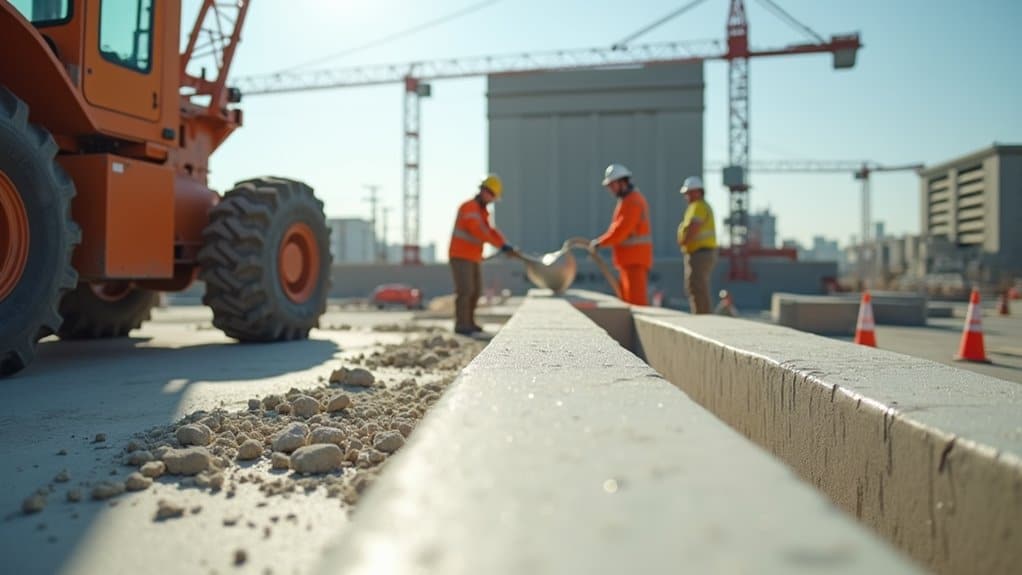
The lightweight and adaptable nature of foam concrete makes it an excellent choice for various infrastructure applications, particularly in geotechnical solutions.
Here are some key uses:
- Tunnelling Projects: Foam concrete is ideal for void filling and ground stabilisation, ensuring safety and integrity in underground constructions.
- Road Construction: It improves flood resistance in road sub-bases, making it suitable for soft soil conditions and enhancing durability.
- Bridge Reinforcement: Foam concrete can fill bridge piers and spans, significantly reducing weight while boosting structural integrity.
Comparison With Traditional Concrete
When comparing foam concrete to traditional concrete, the weight difference is striking; foam concrete can be up to 80% lighter.
This reduced weight not only lightens the load on foundations but also improves insulation because of its low thermal conductivity.
Understanding these distinctions is crucial when deciding which material is right for your project.
Weight Differences
Many construction professionals are turning to foam concrete due to its significant weight reduction compared to traditional concrete. This difference can greatly affect your project's logistics and design considerations.
Here's a quick comparison:
- Density Range: Foam concrete has a density ranging from 400 to 1800 kg/m³, whereas traditional concrete averages around 2400 kg/m³.
- Weight Reduction: Using foam concrete can lead to weight reductions of up to 80%, making it an attractive option for various applications.
- Material Composition: Foam concrete replaces stone aggregates with foam, which contributes to its lighter weight.
The implications of this weight difference are considerable. Lighter materials can reduce transportation costs and labour requirements, potentially saving you money on your projects.
However, it's important to note that foam concrete has a lower compressive strength, typically between 1-15 MPa, compared to traditional concrete's 17 MPa or higher.
Understanding these weight differences and their structural implications will help you make informed decisions tailored to your specific needs.
Insulation Efficiency
Foam concrete is renowned for its outstanding insulation efficiency, making it a popular choice in energy-efficient building projects. With a thermal conductivity of just 0.1 to 0.3 W/m·K, it significantly outperforms traditional concrete. This excellent insulation helps maintain a steady indoor temperature, which can lead to considerable savings on heating and cooling bills.
Due to its unique cellular structure, foam concrete is only 5 to 30% as conductive as standard concrete. To put this into perspective, if you were to use traditional concrete, you'd need to increase its thickness by five times to match the insulation performance of foam concrete.
The higher air content and porosity of foam concrete reduce its density, enhancing its thermal properties even further. Moreover, the continuous layer of foam insulation prevents thermal bridging, which is vital for maximising energy efficiency.
Installation Techniques

Installation techniques for foam concrete can vary depending on the application and desired characteristics. Here are three common methods to consider:
- Inline Mixing: This method employs static inline mixers to blend larger quantities of ingredients, ensuring consistent density and quality throughout the mix.
- Pre-Foam Method: In this approach, pre-formed foam is injected into the cement mixture inside a ready-mix truck. This is especially effective for smaller applications where precision is crucial.
- Wet Method: This technique involves mixing materials with a higher moisture content, also using static inline mixers to maintain workability during application.
When working with foam concrete, it's important to consider the desired density, which can range from 300 to 1200 kg/m³.
The ability to pump foam concrete into difficult-to-reach areas adds to its versatility. By choosing the right installation technique, you can improve both the efficiency and performance of your foam concrete projects while ensuring structural integrity.
Challenges and Limitations
Despite effective installation techniques, challenges and limitations of foam concrete must be recognised. A significant concern is the durability of lower density foam concrete, which often has higher porosity. This leads to greater water absorption, potentially compromising the material's integrity over time.
While foam concrete generally offers good freeze-thaw resistance, poor mix designs can undermine this property, increasing the risk of damage.
Mechanical limitations are another important issue. Foam concrete typically has lower mechanical strength than traditional concrete due to its high air content. This can result in shrinkage and cracking, which may affect structural stability.
Careful analysis of the material's behaviour under load is crucial, especially for engineered assemblies.
Efflorescence is another potential problem linked to high water absorption and porosity.
To address these durability and mechanical challenges, it's vital to implement design strategies like optimising pore size and using supplementary materials. Understanding these issues is crucial for the successful application of foam concrete in various projects.
Future Trends in Foam Concrete

The future of foam concrete looks promising, fuelled by a growing need for sustainable building materials and innovative uses. Here are some key trends to watch:
- Infrastructure Development: Its lightweight properties make foam concrete an ideal choice for constructing roads, bridges, and tunnels, improving structural efficiency and cutting costs.
- Affordable Housing: In developing nations, foam concrete is increasingly used in affordable housing initiatives, helping tackle urbanisation issues while supporting sustainability.
- Energy-Efficient Retrofits: Incorporating foam concrete in refurbishment projects enhances energy efficiency in existing buildings, supporting green building standards like BREEAM.
Ongoing research will drive innovations in foam concrete, focusing on better foam agents and mixing techniques.
Collaboration within the industry will be crucial to develop new equipment and maintain quality control, facilitating wider adoption.
With a strong focus on using recycled materials, the foam concrete sector is well-positioned to support circular economy practices.
As demand rises, we can expect foam concrete to penetrate new applications and markets, marking a significant shift in construction practices.
Frequently Asked Questions
How Does Foam Concrete Perform in Extreme Weather Conditions?
Foam concrete performs well in extreme weather, offering superb thermal insulation that can help lower energy bills. Its unique void structure also provides resistance to freezing, making it suitable for colder climates. This adaptability ensures its durability and effectiveness in various weather conditions.
Can Foam Concrete Be Recycled After Its Useful Life?
Foam concrete is highly sustainable and can be recycled in several ways. It can be crushed, chemically treated, or repurposed, allowing for efficient reuse. This not only minimises environmental impact but also improves the material properties for future construction projects. For instance, crushed foam concrete can be used as lightweight fill or aggregate in new builds, making it a valuable resource after its initial use.
What Is the Curing Time for Foam Concrete?
Curing time for foam concrete usually lasts around 28 days. This period can be affected by factors such as moisture levels and temperature. The density and stability of the foam also play a role, as they can influence the material's strength and performance both during and after the curing process. For instance, if the weather is particularly dry or cold, you might need to take extra care to maintain adequate moisture to ensure proper curing.
Are There Specific Safety Precautions During Foam Concrete Application?
Safety may seem overemphasised, but it's crucial during foam concrete application. Always use proper mixing techniques and application methods. Wear protective gear, ensure good ventilation, and be mindful of how materials behave to avoid accidents. For example, wearing gloves and masks can help prevent skin irritation and inhalation of harmful dust. Stay safe and work smart!
How Does Foam Concrete Affect the Surrounding Environment During Installation?
Foam concrete installation methods lessen environmental impact by using small injection holes, which minimise disruption to the surrounding landscape. This technique avoids extensive demolition, allowing for a quicker process and helping to preserve existing structures. For example, when applying foam concrete in urban areas, this method reduces noise and debris compared to traditional methods. Overall, it helps to limit ecological disruption while achieving effective results.
Conclusion
In summary, foam concrete's remarkable versatility and excellent insulating properties make it an ideal choice for contemporary construction. By recognising its unique benefits and applications, you can make informed decisions that enhance the efficiency of your projects. As you consider new materials, think about how foam concrete could be a strategic option for sustainable building. Embrace innovation and let foam concrete support your forward-thinking projects.

Learn about the diverse types of concrete used in construction and discover which mix can transform your next project.

For a long-lasting driveway that laughs in the face of the UK's unpredictable weather, the C20 concrete mix is your Read more

In the UK, you've got a a lot of lightweight concrete types to choose from, each with its unique perks. Read more