Do you want to ensure the structural integrity of your concrete construction project?
Then, rebar is a crucial component you need. By reinforcing the concrete with this sturdy steel material, you can prevent cracks and enhance its strength and durability.
In this article, we will explore why you need rebar in concrete, factors to consider when using it, and the benefits it offers.
So, let’s dive in and discover how rebar can elevate your concrete constructions to new heights.
Importance of Rebar in Concrete
Rebar is essential for reinforcing concrete structures and preventing cracks. When it comes to reinforcement options for concrete structures, reinforcing steel plays a crucial role in ensuring their strength and durability. By adding rebar to the concrete mix, you significantly enhance its ability to withstand tension and compression forces.
Reinforcing steel in concrete construction offers several advantages. Firstly, it increases the overall load-bearing capacity of the structure, allowing it to support heavier loads without failure.
Secondly, rebar helps control cracking by distributing stress more evenly throughout the concrete. This reduces the likelihood of large cracks forming under pressure or temperature changes.
Furthermore, rebar improves the longevity of concrete structures by resisting corrosion caused by environmental factors such as moisture and chemicals. It strengthens not only bridges and buildings but also foundations, retaining walls, and other critical infrastructure elements.

Factors to Consider When Using Rebar in Concrete
When using reinforcement in your concrete, there are several factors you should consider.
The first factor is the type of reinforcement option you choose. There are various options available such as rebar, wire mesh, and fibre-reinforced concrete. Each option has its own advantages and disadvantages, so it’s important to understand their properties and suitability for your specific project.
Another factor to consider is the amount of reinforcement required. This depends on the load-bearing capacity needed for your structure and the local building codes.
Additionally, you need to think about placement and spacing of the reinforcement within the concrete to ensure proper distribution of forces.
Lastly, consider the cost implications of different reinforcement options as well as their compatibility with other construction materials.
Benefits of Using Rebar in Concrete Construction
One of the benefits of using reinforcement in construction is that it enhances the strength and durability of structures. When it comes to concrete construction, rebar plays a crucial role in providing these advantages. What Is Better C20 or C25 Concrete?
Firstly, rebar helps distribute loads evenly across the structure, preventing cracks and ensuring structural integrity. This reinforcement also increases the flexural strength of concrete, making it more resistant to bending and shearing forces.
Additionally, rebar can improve the resistance to environmental factors such as earthquakes or extreme weather conditions. However, there are some disadvantages to consider when using rebar in concrete construction. These include the added cost and complexity of installation, as well as potential corrosion issues over time if not properly protected.
Nonetheless, the benefits outweigh these drawbacks when constructing strong and durable concrete structures. How Many Wheelbarrows In A Cubic Metre Of Concrete?
Alternatives to Rebar in Concrete
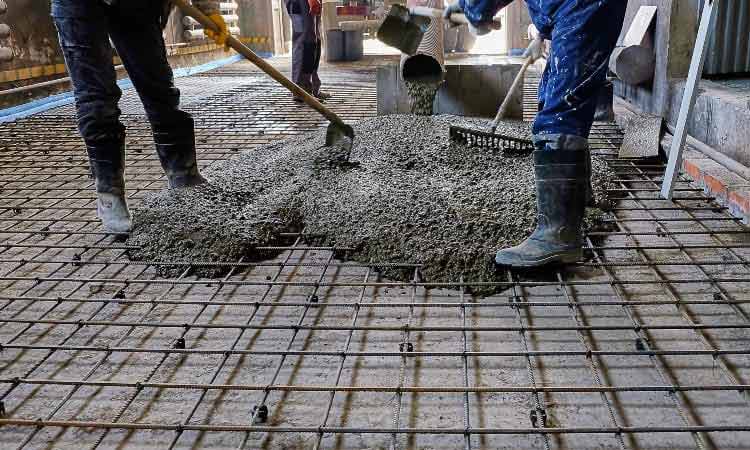
Using alternatives to rebar in concrete construction can offer similar benefits in terms of strength and durability. One such alternative is steel mesh, which provides reinforcement by distributing the load across a larger area. Steel mesh is made up of interconnected wires arranged in a grid pattern, creating a strong and stable reinforcement system within the concrete.
Another alternative is fibre reinforcement, which involves adding fibres made from materials such as glass or synthetic polymers to the concrete mix. These fibres act as tiny reinforcements throughout the concrete, improving its resistance to cracks and enhancing its overall performance.
Both steel mesh and fibre reinforcement offer viable options for replacing rebar in concrete construction. They provide increased strength and durability while reducing the need for traditional steel reinforcement.
Final Thoughts
In conclusion, rebar is a crucial component in concrete construction. It provides strength, durability, and structural integrity to the concrete. By reinforcing the material, it can withstand heavy loads and resist cracking.
According to a study conducted by the American Concrete Institute, structures reinforced with rebar have shown an increase in load-bearing capacity of up to 40% compared to those without reinforcement. Therefore, it is essential to include rebar in concrete projects for long-lasting and reliable results.
Call us to get a price quote. Contact us today on 0800 074 0442 to receive a free quote or visit our website.
Related Articles

Are you ready to learn the secret of efficient concrete transportation? In this article, we will delve into the intriguing Read more

Is it more cost-effective to mix your own concrete or have it delivered? This article examines the factors to consider Read more

Are you torn between choosing C20 or C25 concrete for your construction project? Well, let us shed some light on Read more